
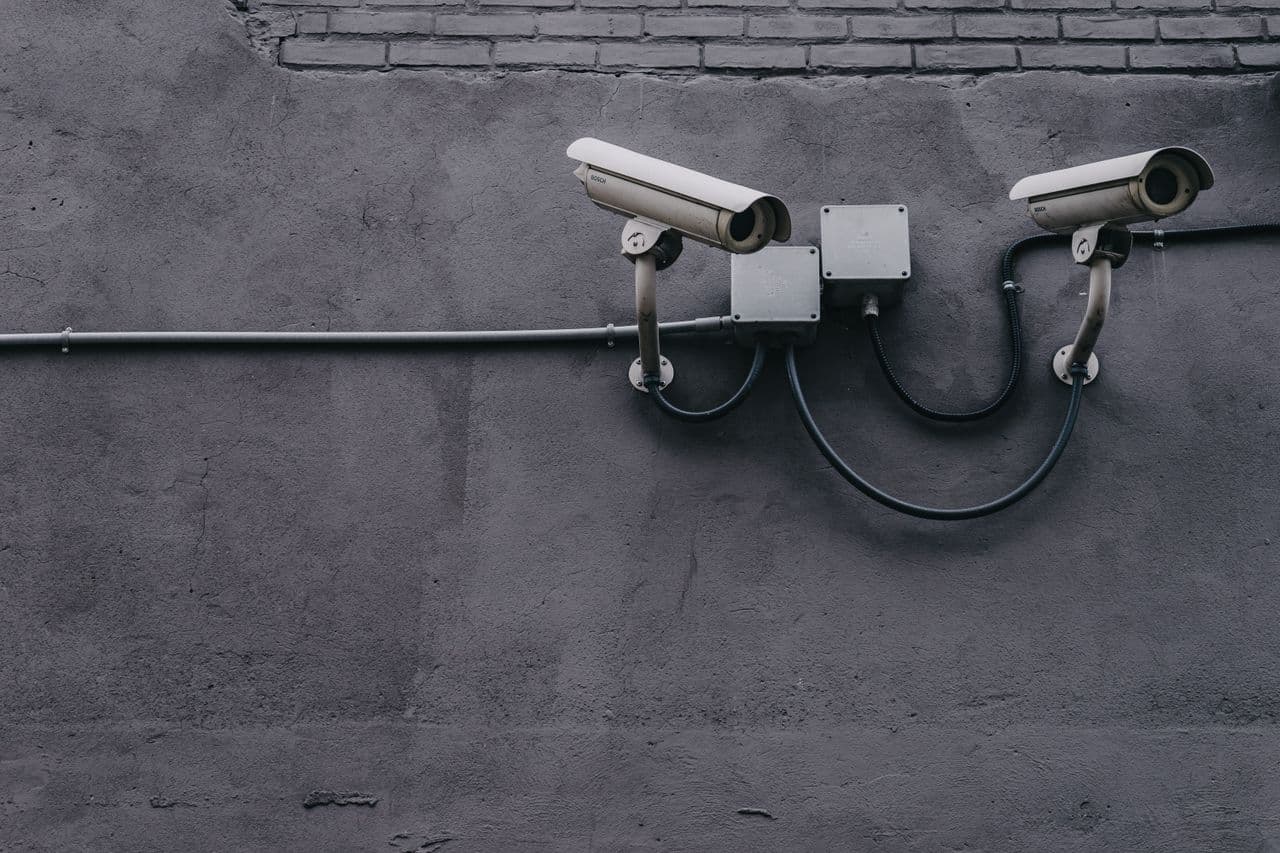
There is a question worth asking about any camera system, and almost nobody asks it before buying: where does the recording physically live?
If the answer is a memory card inside the camera, then the evidence and the target are the same object. Someone who takes the camera off the wall has also taken every second of footage of themselves doing it. That is not a hypothetical failure mode — it is the obvious move, and it is why we do not build systems that way.
How a recorder changes the picture
An NVR or DVR is a separate box, cabled to the cameras and kept somewhere out of the way — a cupboard, a locked room, an upstairs office. The cameras become sensors that send video away from themselves rather than little vaults holding their own evidence.
Now removing a camera achieves nothing except ending its feed. Everything up to that moment, including the person reaching for it, is already recorded elsewhere in the building.
- Recording lives away from the camera, in a place you choose
- Removing a camera destroys no footage
- One place to search, export and back up
- Storage measured in terabytes, not tens of gigabytes
The other reasons cards disappoint
Theft is the dramatic failure. The mundane ones are more common. Memory cards are consumables: surveillance overwrites the same card continuously, and cards wear out under that treatment, often silently. Plenty of people discover a failed card only when they go looking for a specific day and find nothing there.
Capacity is the other limit. A card holds a small fraction of what a recorder's hard disk holds, so retention is measured in days rather than weeks — and it is usually shorter than people assume, because the camera quietly overwrites the oldest footage to keep going.
Then there is retrieval. Pulling footage off a card can mean getting the camera down off a wall, which is exactly what you do not want to be doing under pressure.
Where a card still earns its place
Cards are not useless, and it is worth being fair about that. For one or two cameras at a small site, where there is nowhere sensible to put a recorder and the budget is genuinely tight, a card is better than no recording at all.
They also make a good second line of defence. Some systems record to a card continuously as well as to the recorder, so if the network drops or a cable is cut, the camera keeps recording locally and can fill the gap afterwards. Used that way — as a backup rather than the primary — a card adds real resilience.
Where to actually put the recorder
A recorder only helps if it is somewhere less accessible than the cameras. Leaving it on an open shelf beside the front door recreates the problem you were solving.
Put it out of sight and ideally behind a lock, give it a small UPS so a pulled main does not stop recording, and consider copying event clips off-site so that even the loss of the whole box does not erase everything. That last step matters most for shops and businesses, where the recorder itself is a known target.
- Somewhere out of sight, ideally locked
- On a small UPS so a cut supply does not stop recording
- Event clips copied off-site for the worst case
- Cameras covering the approach to the recorder itself
The short version
Ask where the footage physically lives, and make sure the answer is not inside the thing hanging on your outside wall. A recorder kept somewhere sensible gives you longer retention, more reliable storage, easier retrieval — and footage that survives the very event you installed cameras to capture.