
CCTV Surveillance Systems
Dome, bullet and IP HD cameras designed and placed for full coverage.
What this actually is
A CCTV system is only as good as its weakest camera position. We design coverage around the way people actually move through a property — entrances, approach paths, blind corners and cash or stock areas — then pick the camera body, lens and recorder to match. The result is footage that identifies a face at the gate, not a grey shape somewhere in the frame.
How the job runs
- 1
Site survey
We walk the property and mark entry points, approach paths and the areas worth protecting. Lens choice follows distance: a wide lens covers a courtyard, a narrower one reads a number plate at the gate.
- 2
Cabling and power
Cameras are wired back to a single recorder position. IP cameras run on Cat6 with Power over Ethernet, so one cable carries video and power. HD analog cameras run on coaxial cable, which tolerates much longer runs.
- 3
Recorder and storage
An NVR or DVR records continuously, on motion, or on a schedule. We size the hard disk to the retention you want — typically 15 to 30 days — based on camera count, resolution and frame rate.
- 4
Commissioning
Every camera is aimed and focused on site, night vision is checked after dark, motion zones are tuned to cut false alerts, and we hand over with the app configured on your phone.
What's included
- Site survey and camera placement plan
- Cameras, recorder, storage and power supplies
- Concealed structured cabling and conduit
- Mobile and desktop app setup
- Night-vision and motion-zone tuning on site
- 12-month warranty; AMC available
Best suited to
- Homes and apartments wanting gate and perimeter cover
- Shops and showrooms protecting stock and billing counters
- Hospitals, clinics and schools with public foot traffic
- Godowns, factories and yards needing long-range coverage
The choices worth understanding
Dome and turret
Dome cameras sit flush to a ceiling and read as discreet, which suits shops and receptions. Turret cameras are the practical outdoor choice — the lens sits in an open ball-and-socket mount, so there is no dome cover to catch infrared glare or collect dust.
Bullet
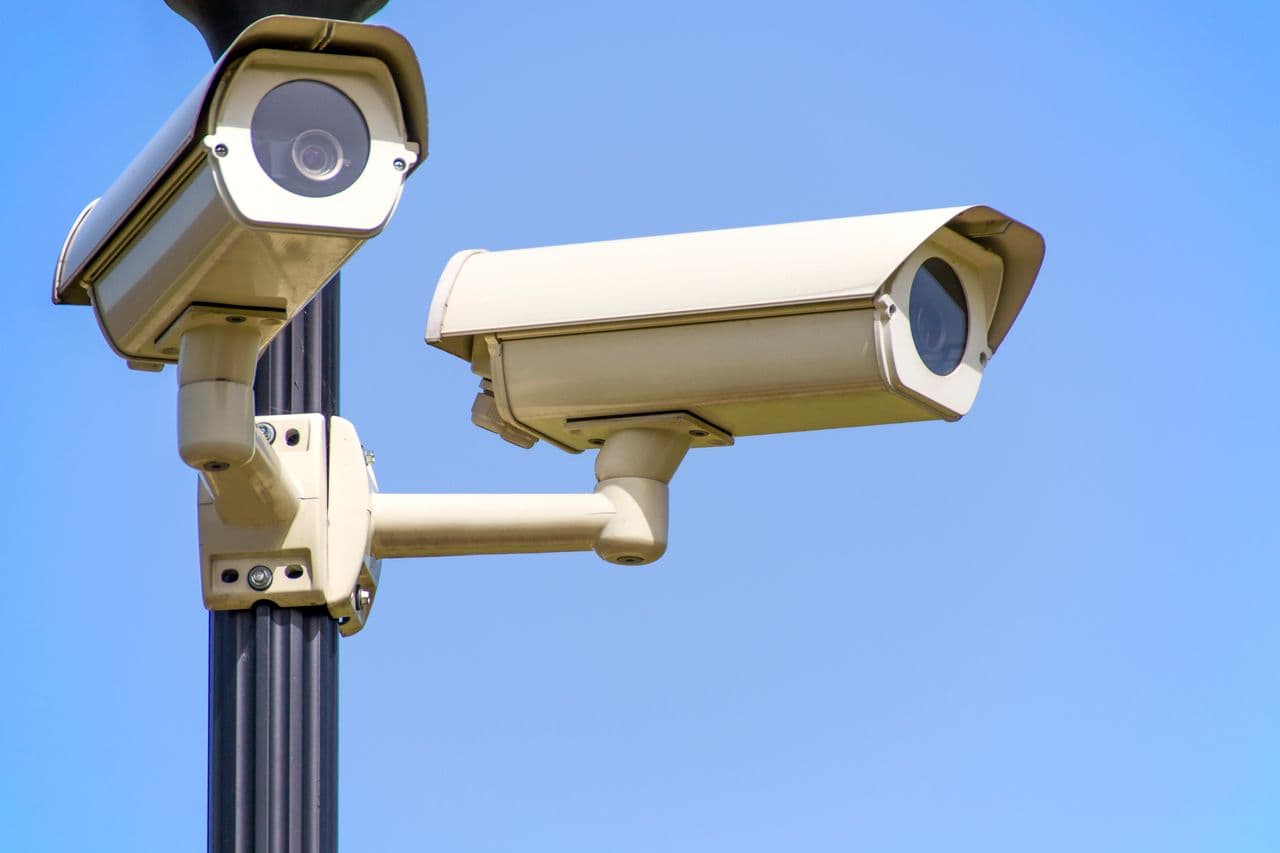
A long cylindrical body built for distance rather than width. Mounted on a wall it covers a driveway, boundary wall or approach road, and its visible shape is a deterrent in itself.
PTZ
Pan, tilt and zoom under app or joystick control, with optional auto-tracking. It earns its cost on large or actively watched sites — a yard, campus or godown — where one operator covers ground that would otherwise need several fixed cameras.
IP or HD analog
IP cameras scale well past 4K and carry analytics like line-crossing and person detection. HD analog carries up to 1080p over existing coax, which makes it the economical route when a building is already cabled for older cameras.
Straight answers
How many cameras do I actually need?
Fewer than most people expect, if they are placed well. A typical home is covered by four to six: the gate, the main door, the rear approach and one wide view of the compound. We plan positions before quoting, so you pay for coverage rather than camera count.
How long is footage kept?
That is a storage decision, not a camera one. Most of our installs retain 15 to 30 days of continuous recording. Recording on motion instead of continuously stretches the same disk considerably, and we can size for longer retention if you need it.
Will the cameras work at night and in the monsoon?
Yes. All outdoor cameras we fit are infrared for night vision and weather-rated for driving rain. On coastal properties around Kannur we also specify housings and mounts that stand up to salt-laden air, which corrodes cheaper hardware quickly.
Can I keep my existing cameras or cabling?
Often yes. If a building is already wired with coaxial cable, HD analog cameras reuse that cabling and avoid re-running conduit through finished walls. We check what is on site during the survey and tell you honestly whether reusing it is worth it.