
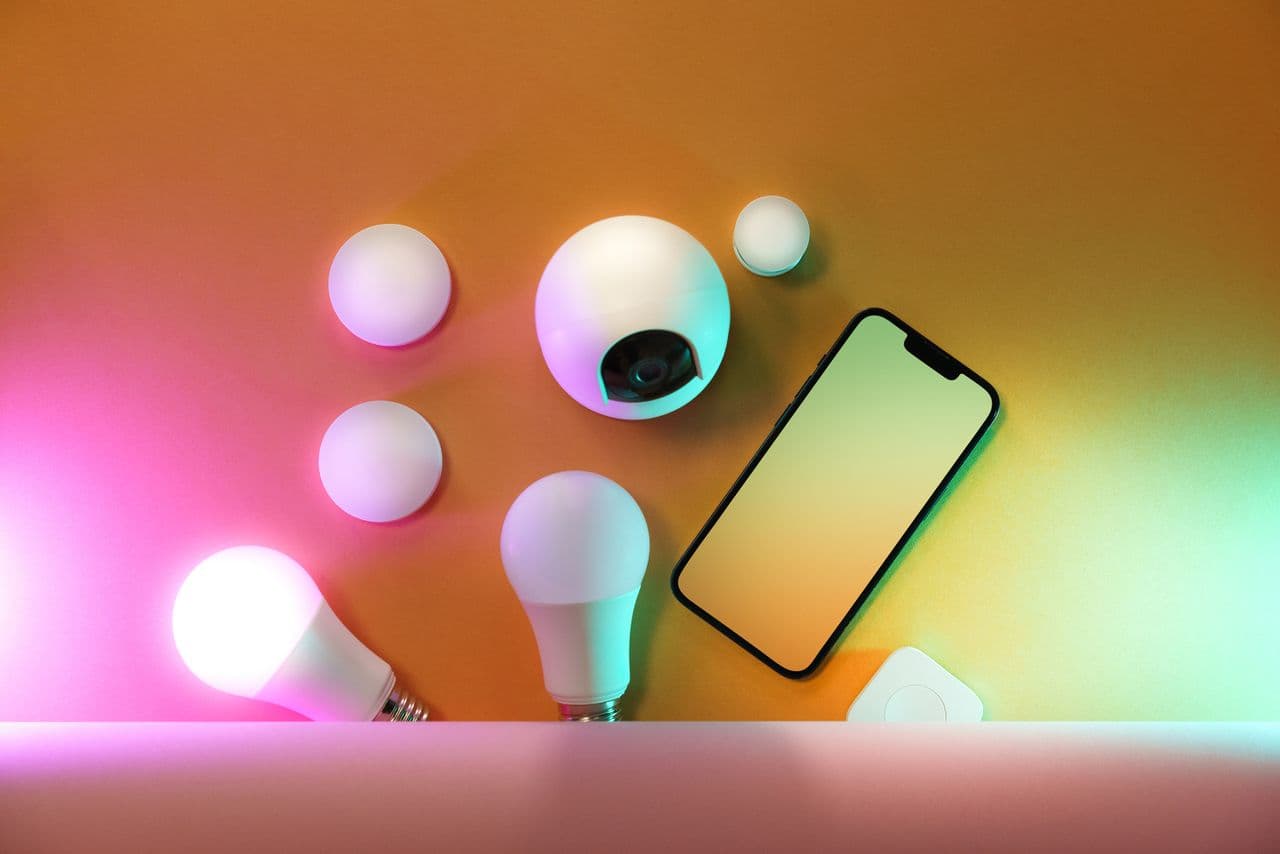
Climate Control
Smart thermostats and climate management for year-round comfort.
What this actually is
Climate control links your air conditioning, fans and ventilation to schedules, sensors and your phone, so rooms are comfortable when they are occupied and idle when they are not. In a coastal climate like Kannur's, where humidity does as much damage to comfort as heat, controlling when and how things run makes a noticeable difference to both comfort and running cost.
How the job runs
- 1
Survey of existing equipment
We check what you already have — split ACs, fans, exhaust and ventilation — and how each is controlled today. Most existing air conditioners can be brought under control without being replaced.
- 2
Adding control
Infrared controllers replicate your AC remote and bring it under app and schedule control. Fans and ventilation are handled through switch modules or fan controllers on the existing circuits.
- 3
Sensors and zones
Temperature and occupancy sensors let rooms respond on their own rather than to a fixed timetable, and let you treat bedrooms, living areas and offices as separate zones with their own targets.
- 4
Routines and handover
We set schedules for the patterns you actually live by — pre-cooling before bedtime, everything off when the house is empty — and hand over with app and voice control configured.
What's included
- Survey of existing AC, fans and ventilation
- IR controllers or smart thermostats
- Temperature and occupancy sensors where useful
- Zoning, schedules and routines
- App and voice assistant setup
- Handover and tuning after the first week
Best suited to
- Homes with several split air conditioners
- Bedrooms and offices with predictable occupancy
- Coastal properties fighting humidity year round
- Owners wanting to cut AC running costs
The choices worth understanding
IR controllers for existing ACs
A small infrared device learns your AC remote and brings the unit under app, schedule and voice control. It is by far the cheapest route and needs no change to the air conditioner itself.
Smart thermostats and controllers
Deeper integration gives proper temperature targets, room-by-room zoning and usage history, rather than simply replaying remote commands. It suits larger homes and offices with several units.
Ventilation and dehumidification
Automated exhaust and ventilation control tackles humidity directly, which in a coastal climate often does more for comfort — and for protecting furniture and electronics — than cooling harder.
Straight answers
Do I have to replace my air conditioners?
Almost never. An infrared controller reproduces your existing remote, so a standard split AC can be scheduled, controlled from your phone and tied into voice assistants without changing the unit at all.
Will this reduce my electricity bill?
It can, mainly by stopping units running in empty rooms and by holding sensible target temperatures instead of the coldest setting. The savings depend heavily on how the house is used today, so we would rather show you the plan than promise a number.
Does it work with any brand of AC?
Infrared control works with the large majority of remote-operated split units regardless of brand. Deeper thermostat-level integration depends on the specific model, and we check compatibility during the survey.
What about humidity rather than heat?
That is often the real problem near the coast. Automated ventilation and exhaust control, and running air conditioning in dry mode on a schedule, both help — and protect furniture, wiring and electronics from damp in the process.