
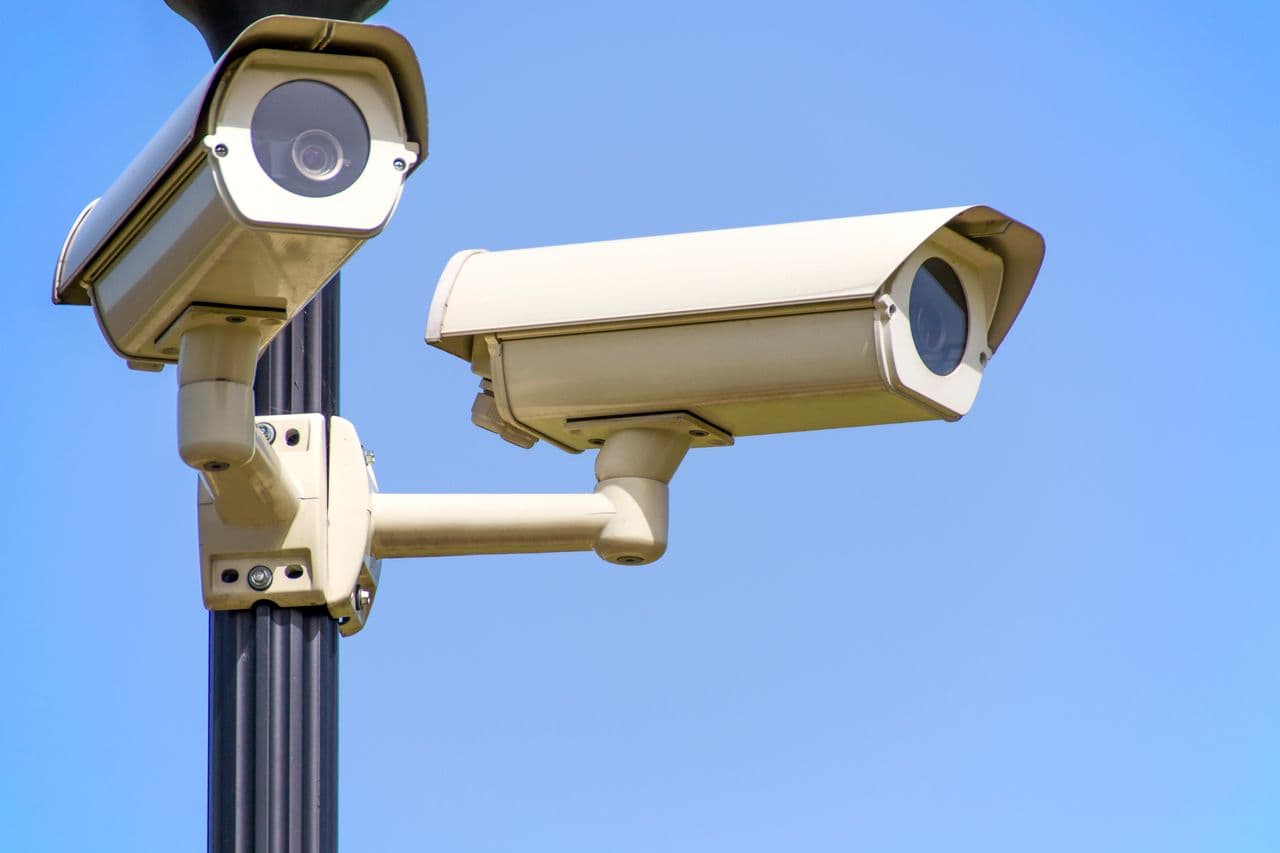
There are two mainstream ways to get high-definition video from a camera to a recorder. IP cameras send digital video over network cable. HD analog cameras — the family including HD-CVI, HD-TVI and AHD — send high-definition video over the same coaxial cable that older analog systems used.
Both produce good footage. Choosing between them is mostly a question about your building, not about picture quality, and the honest answer changes depending on what is already installed.
What IP gives you
IP cameras scale far past the ceiling of analog systems — well beyond 4K where analog effectively stops around 1080p. That headroom matters when you need to crop into a recorded frame and still identify someone.
The bigger practical advantage is on-camera analytics. Line crossing, intrusion zones, and person-versus-vehicle classification run on the camera itself. If your current system floods you with alerts every time a branch moves, classification is the upgrade that fixes it, and it largely lives in the IP world.
Cabling is also simpler in one respect: Power over Ethernet means a single Cat6 run carries both video and power, so cameras do not need a separate power supply at each position.
- Resolution well beyond 1080p
- On-camera analytics and smart detection
- Single cable for power and data via PoE
- Easier to extend across an existing network
What HD analog still does better
The first is reuse. If your building already has coaxial cable from an older camera system, HD analog cameras run on that cable. Avoiding a re-run of conduit through finished walls and ceilings is often the single largest cost saving available, and it is invisible on a hardware comparison sheet.
The second is distance. Coaxial runs comfortably over distances that would need a switch or repeater on a network cable, which matters on larger plots, farm properties and industrial sites where the recorder is a long way from the perimeter.
The third is latency. Analog transmission is effectively real time, whereas IP video is compressed and travels through network equipment, introducing a small delay. For recorded evidence this is irrelevant. For a live operator driving a PTZ camera, it is noticeable.
The cost picture
Per camera, HD analog is generally cheaper, and the recorder is usually cheaper too. But comparing hardware alone is misleading. If a site needs new cabling either way, much of analog's cost advantage disappears, and IP's analytics and resolution headroom start to look like better value over the life of the system.
The reverse is also true: on a building already wired for coax, choosing IP means paying for a full re-cable to gain capabilities you may not need.
A simple decision path
- Existing coax in place and no need for analytics — HD analog, reuse the cabling
- New build or a full rewire anyway — IP, you are paying for cable once
- Long cable runs to a distant boundary — analog, or IP with a switch
- Drowning in false alerts — IP with person and vehicle classification
- Need to crop into footage and identify faces — IP for the resolution headroom
Mixing the two
You do not always have to choose. Many recorders accept both analog and IP inputs, which lets you keep working analog cameras on existing coax while adding IP cameras where you need analytics or higher resolution.
This is often the sensible path for a business expanding a system that already works. It avoids throwing away serviceable hardware, and it puts the new spend exactly where the capability gap is.
The short version
Let the building decide. Existing coax and straightforward requirements point to HD analog. New cabling, analytics needs or high-resolution identification point to IP. And if you are extending a system that already works, a hybrid recorder usually beats replacing everything.