
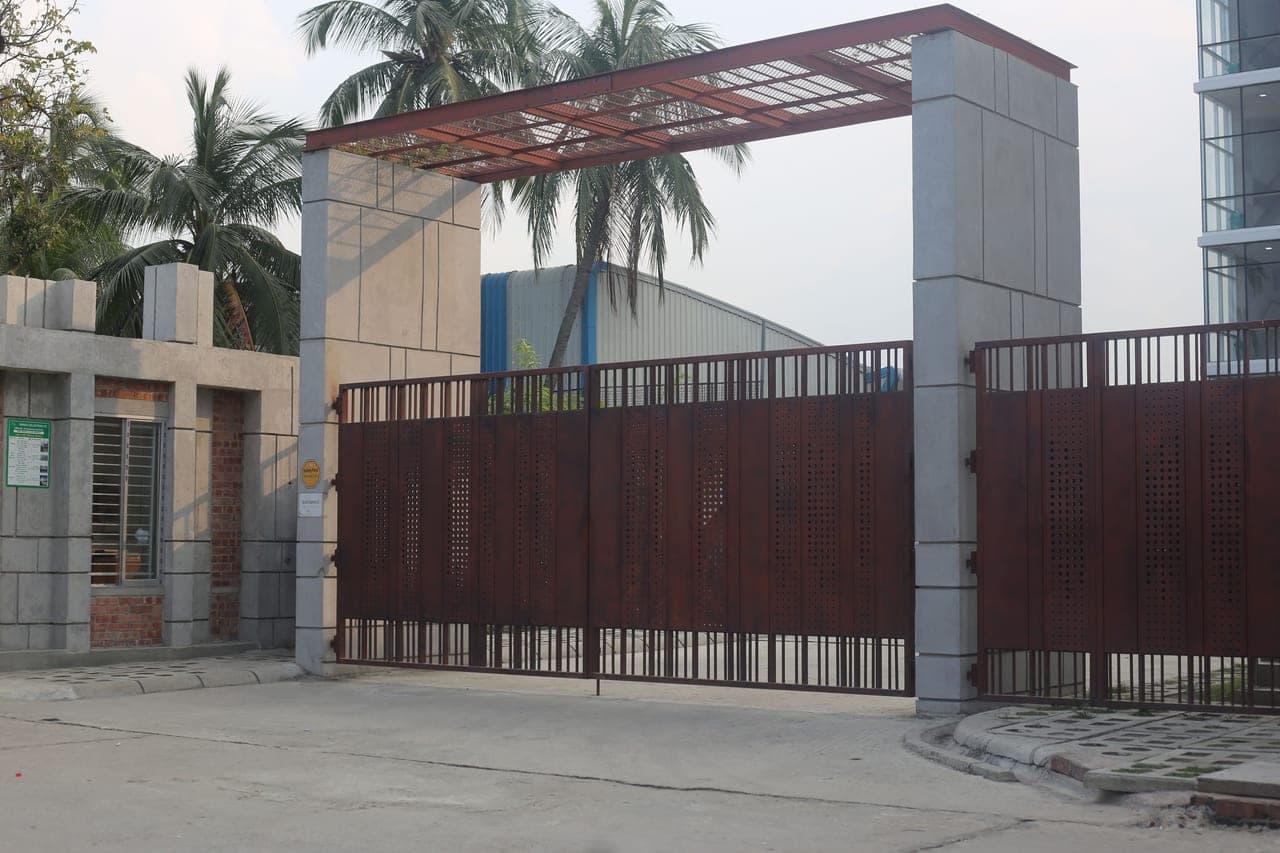
Swing Gate Automation
Arm or underground motors for gates that swing in or out on hinges.
What this actually is
Swing gates open on hinges like a door, which suits properties with room behind the entrance and is usually the cheaper conversion because there is no track to lay. Automation adds a motor to each leaf and takes the effort out of a gate that is heavy, on a slope, or simply awkward to open in monsoon rain.
How the job runs
- 1
Survey and hinge check
We check the hinges, posts and swing path. Worn hinges or a leaf that drops at the far end will defeat any motor, so this is assessed honestly before anything is quoted.
- 2
Choosing the drive
An articulated arm or a straight ram is fixed between the post and the leaf, or an underground motor is set into the pier for a gate where nothing should be visible. The choice follows pier width and how far the gate must open.
- 3
Fitting and setting
Motors are mounted, the control panel wired, and open and close positions set. Soft start and soft stop are tuned so a heavy leaf does not slam or jolt at either end of its travel.
- 4
Safety and handover
Photocells go across the opening, obstruction force is set and tested, and the manual release is demonstrated. Double gates are sequenced so the leaves close in the right order and latch properly.
What's included
- Survey of hinges, posts and swing path
- Motors, control panel and wiring
- Soft start and soft stop setting
- Photocell sensors and force adjustment
- Leaf sequencing on double gates
- Manual release, tested at handover
Best suited to
- Homes with space behind the gate to swing
- Existing gates being retrofitted
- Ornamental gates where hardware should stay hidden
- Double-leaf entrances to compounds
The choices worth understanding
Articulated arm
A jointed arm that suits wide piers and gates that need to open through a large angle. It is forgiving of imperfect geometry, which makes it the usual pick for retrofits onto existing gateposts.
Ram or linear actuator
A straight piston between post and leaf. Neat and strong on narrow piers with a conventional swing, and generally the tidier look where the geometry allows it.
Underground motor
The motor sits in a housing set into the ground at the hinge, leaving the gate looking entirely unautomated. It is the most expensive option and needs proper drainage in the housing — important in Kerala's rain.
Straight answers
Swing or sliding — which should I choose?
Space usually decides it. If there is clear room behind the gate for the leaves to open, swing is simpler and generally cheaper to automate. If the gate opens onto a road, or a parked car blocks the arc, sliding is the answer.
Will the motor cope with my heavy gate?
It will if it is sized for the gate rather than the budget. We weigh and measure before quoting, because a motor run near its limit on every cycle wears out quickly and is the most common reason a cheap install fails within a couple of years.
Can it open just one leaf?
Yes, and it is worth setting up. A pedestrian mode opens a single leaf for someone on foot, which saves the full cycle and reduces wear on a gate that gets used many times a day.
Does it work with an intercom or camera?
It can. The gate controller accepts a trigger from a video door phone or access system, so you can see who is at the gate and release it from inside the house or from your phone.