
Sliding Gate Automation
Motorised sliding gates that run on a track or cantilever, ideal where space is tight.
What this actually is
A sliding gate runs sideways along a track or on a cantilever, which makes it the practical choice where there is no room for leaves to swing open — a gate that opens straight onto a road, or a short driveway with a car already parked in it. Motorising one turns the daily routine of getting out, unlatching and pushing into a button press from the driver's seat.
How the job runs
- 1
Survey and weighing
We measure the gate, estimate its weight and check the run. Motor choice follows the actual mass and how often the gate will cycle, because an undersized motor on a heavy gate fails early and noisily.
- 2
Track and foundation
A sliding gate needs a true, level track and a solid concrete pad for the motor. Most problems we are called out to fix on other people's installs trace back to this stage rather than to the electronics.
- 3
Motor, rack and limits
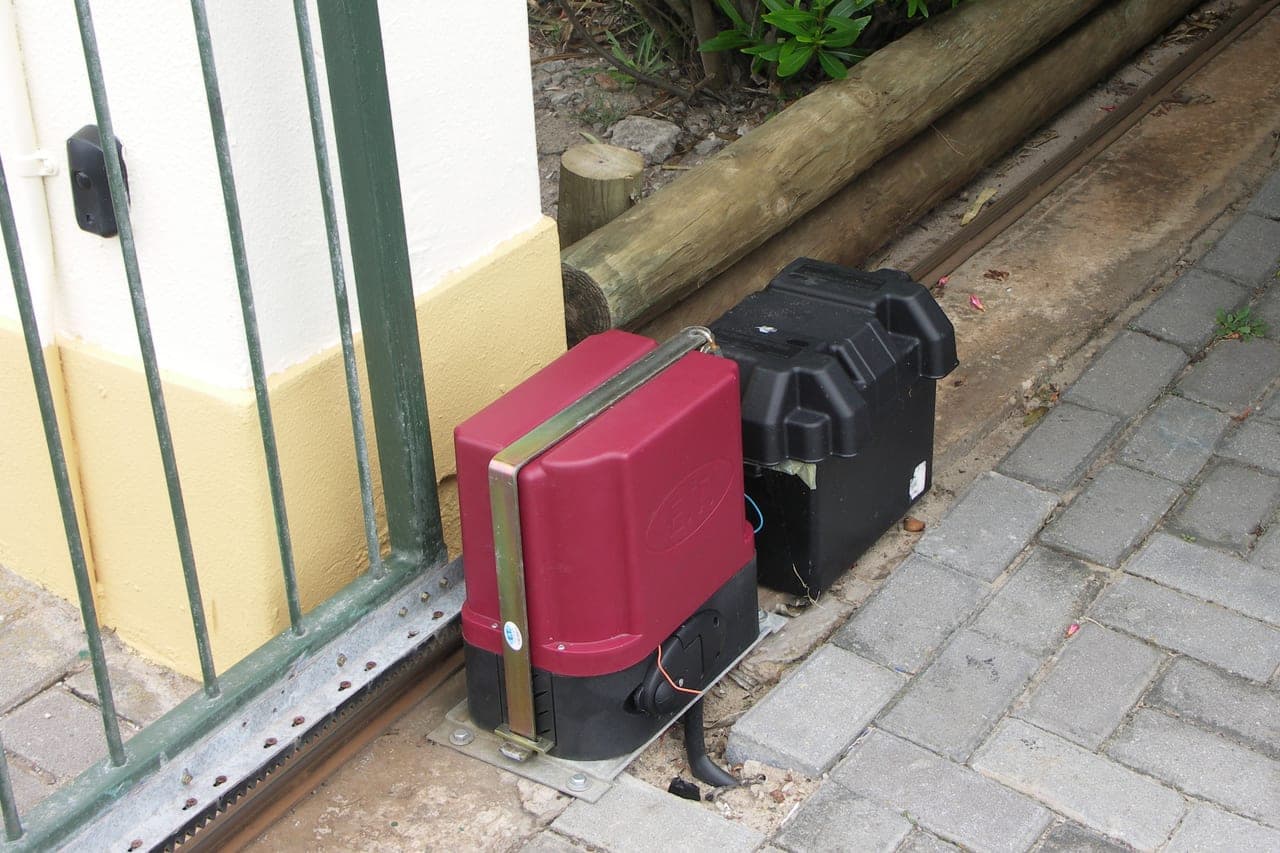
The motor drives a toothed rack fixed along the gate. We set the open and close limits, adjust force so the gate stops on an obstruction, and wire the control panel and power supply.
- 4
Safety and handover
Photocells go in across the opening, the manual release is tested, and remotes or keypads are paired. We run the gate through full cycles and show you how to release it by hand in a power cut.
What's included
- Site survey, gate weighing and motor sizing
- Motor, control panel and toothed rack
- Track or cantilever preparation
- Photocell safety sensors and force adjustment
- Remotes, keypad or RFID as specified
- Manual release, tested at handover
Best suited to
- Entrances opening directly onto a road
- Short driveways with no room to swing
- Wide commercial and industrial entrances
- Sloping or uneven approaches (cantilever)
The choices worth understanding
Ground track
Wheels run on a rail set into the driveway. It is the economical and most common arrangement, and it carries heavy gates well. The track needs sweeping clear — grit and leaves are what make a ground-track gate judder.
Cantilever
The gate is carried on rollers on a post and never touches the ground, so there is no track to clog and nothing to catch on an uneven or sloping entrance. It costs more and needs a longer counterbalance behind the opening.
Control method
Remote handsets are standard. Keypads suit households with several users, RFID tags suit staff and regular vehicles, and app control adds opening for visitors while you are away from the property.
Straight answers
What happens in a power cut?
Every gate we automate keeps a manual release — a key or lever that disengages the motor so the gate can be pushed by hand. We show you how to use it at handover rather than leaving you to find out during an outage.
Can you automate my existing gate?
Usually yes, provided the gate is straight, runs freely by hand and the frame is sound. If it already sticks or drags when pushed, a motor will only force the problem harder — we would fix the gate first, and we will say so at the survey.
Is it safe around children?
It is when installed properly. Photocells across the opening stop and reverse the gate if anything breaks the beam, and the motor's force is set so it stops on contact rather than pushing through. We treat both as standard, not as paid extras.
How much maintenance does it need?
Keep the track clear and have the rollers, force settings and photocells checked periodically. A ground-track gate in a dusty or leafy compound needs that attention more often, which is what our AMC covers.