
On-Grid Solar
Grid-tied solar that lowers your bills and feeds surplus back to the grid.
What this actually is
An on-grid system sends solar power straight into your building, and pushes anything you are not using out to the KSEB grid through a bi-directional meter. There are no batteries, which keeps the cost down and the maintenance close to zero. For a household with steady daytime usage and a reliable supply, it is the fastest-paying way into solar.
How the job runs
- 1
Shadow and roof survey
We check roof orientation, tilt and shading through the day, and confirm the structure can carry the array. Even a small shadow from a parapet or coconut palm can pull down the output of a whole string, so this is measured, not eyeballed.
- 2
Sizing against your bill
System size follows your actual consumption from recent KSEB bills, rather than a round number. Oversizing wastes capital under net metering; undersizing leaves you buying power you could have generated.
- 3
Approval and net metering
We file the application, and KSEB issues a Technical Feasibility Report — usually within a few weeks. Once the system is installed and inspected, a bi-directional meter is fitted so export and import are counted separately.
- 4
Installation and commissioning
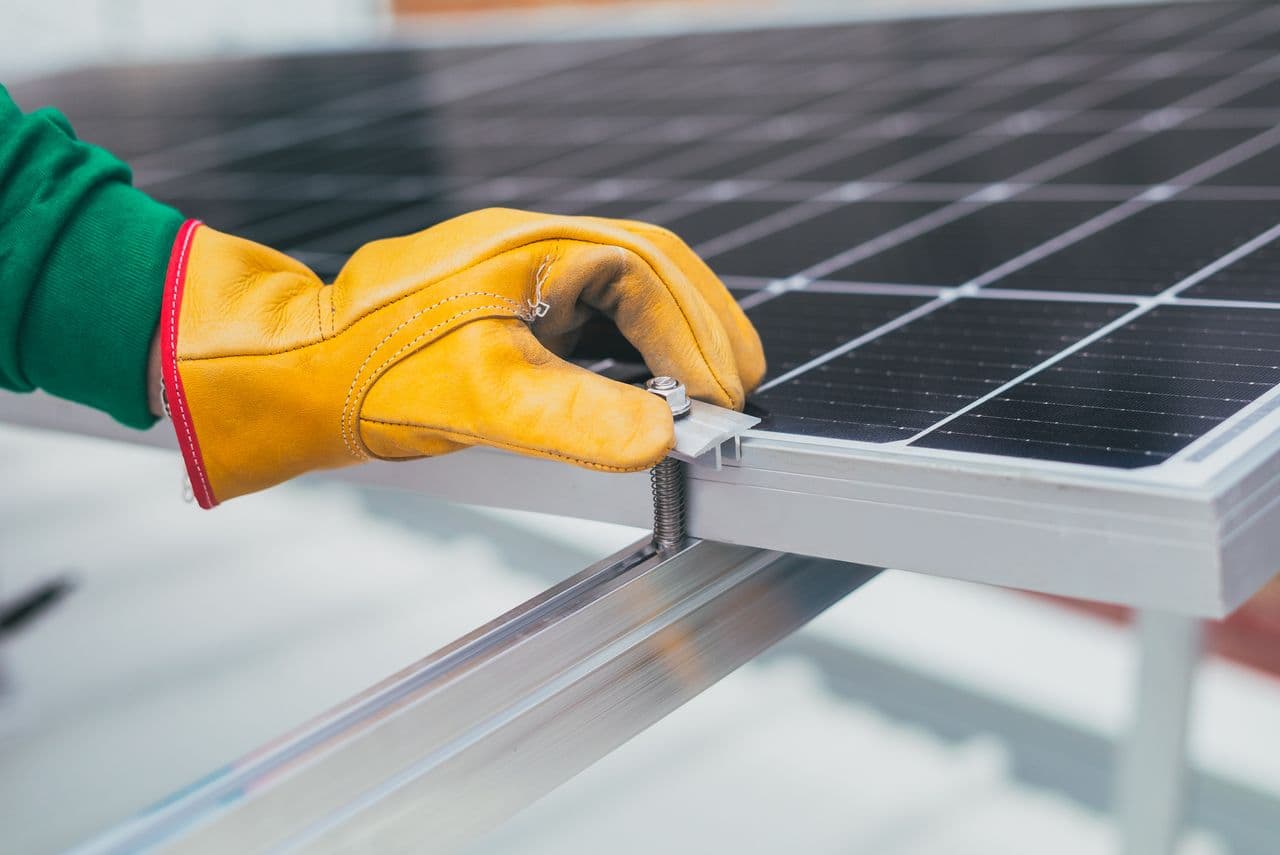
Mounting structure, panels, inverter, protection and earthing go in, followed by testing and commissioning. We hand over with monitoring configured so you can see generation on your phone.
What's included
- Shadow analysis and structural check
- System sizing against your KSEB bills
- Subsidy and net-metering paperwork
- Mounting structure, panels, inverter and protection
- Earthing, cabling and commissioning
- Generation monitoring set up on your phone
Best suited to
- Homes with a reasonably reliable grid supply
- Daytime-heavy users — homes with pumps, ACs or work-from-home loads
- Shops, clinics and offices running through daylight hours
- Anyone whose priority is bill reduction rather than backup
The choices worth understanding
Panel choice
Mono PERC and newer N-type modules differ in efficiency and in how well they hold output at high temperature — which matters in Kerala. Higher efficiency earns its premium mainly when roof space is tight.
String or micro-level conversion
A single string inverter is the standard, most economical choice on a clean, unshaded roof. Where shading is unavoidable, module-level electronics stop one shaded panel from dragging down the rest of the string.
Capacity band
Residential systems are commonly 1kW to 5kW. The central subsidy is tiered, so the economics of stepping up a size are worth working through before you commit — we will show you the numbers for your bill.
Straight answers
Will it run my house during a power cut?
No — and this surprises people. An on-grid inverter is required to shut down when the grid goes down, so that it cannot feed power into lines that someone may be working on. If you need power through outages, you want a hybrid system.
What subsidy can I claim?
Under the central PM Surya Ghar scheme, residential rooftop subsidy is tiered by capacity — in the region of ₹30,000 for 1kW, ₹60,000 for 2kW and ₹78,000 for 3kW and above, paid into your bank account after commissioning. Scheme rates and rules do change, so we confirm the current position before you commit.
How does net metering actually pay me back?
A bi-directional meter counts what you export and what you import separately, and your bill is settled on the net. Daytime generation you do not use offsets what you draw at night, which is why sizing against your real consumption matters so much.
What maintenance does it need?
Very little beyond keeping the panels clean. Dust and bird droppings cost you output, and the pre-monsoon and post-monsoon periods are the sensible times to check. We offer an AMC that covers cleaning and an annual performance check.